
Mahashivratri is one of the most sacred and spiritually significant festivals in Hinduism. This holy occasion is dedicated to the worship of Lord Shiva and is considered a special day for devotion, meditation, and inner purification.
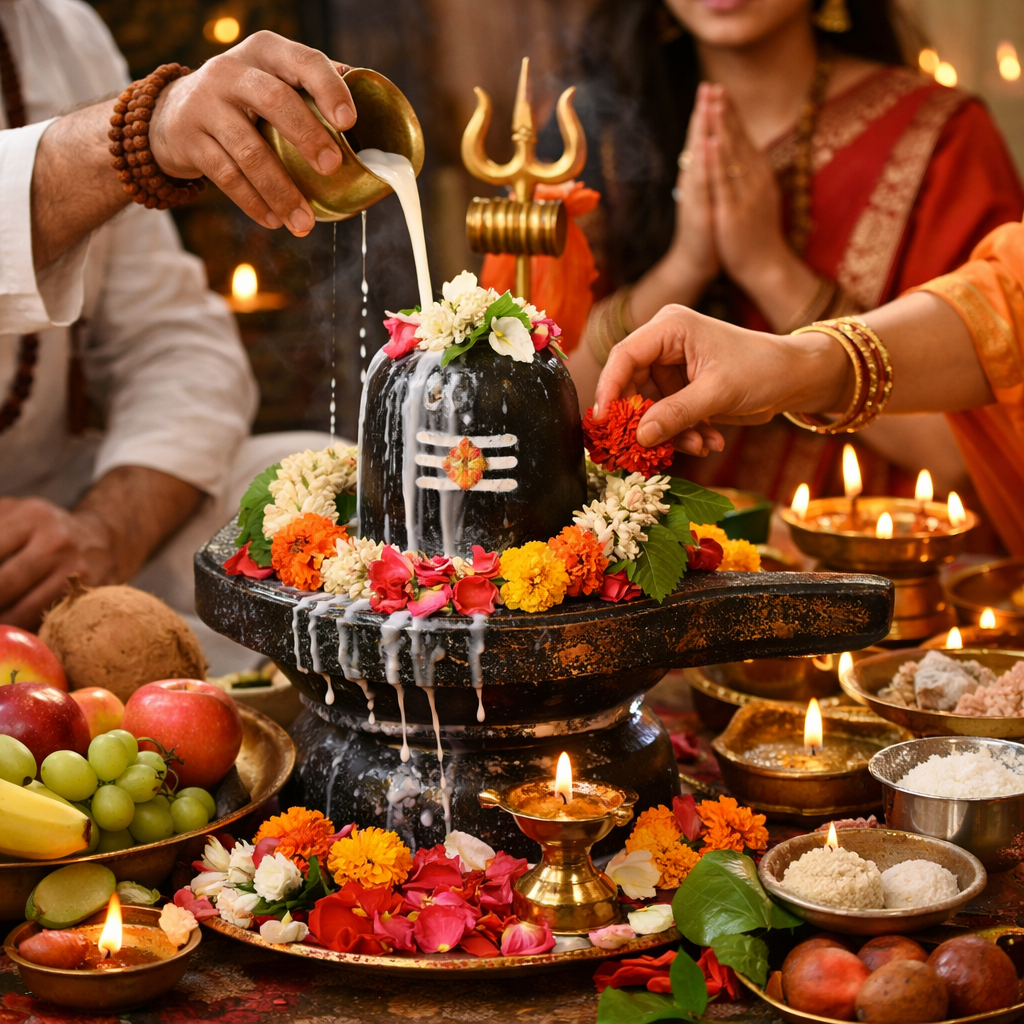
What is Mahashivratri?
The word Mahashivratri means “the Great Night of Lord Shiva.”
On this auspicious day, devotees observe fasting, stay awake throughout the night, and worship the Shiva Lingam with deep faith and devotion. It is believed that worshipping Lord Shiva on this night helps remove sins and leads one toward spiritual liberation.
Why Is Mahashivratri Celebrated?
Mahashivratri is celebrated for several mythological and spiritual reasons:
Marriage of Shiva and Parvati
- This day marks the divine marriage of Lord Shiva and Goddess Parvati
- It symbolizes marital harmony, love, and devotion
Samudra Manthan and Neelkanth
- During the churning of the ocean (Samudra Manthan), deadly poison emerged
- Lord Shiva consumed the poison to save the universe
- Because of this, He came to be known as Neelkanth (the blue-throated one)
- This act represents sacrifice and protection of the world
Emergence of the Shiva Lingam
- It is believed that the Shiva Lingam first appeared on this day
- Hence, worship of the Shiva Lingam holds special importance
Night of Spiritual Awakening
- Mahashivratri is considered the most powerful night for yoga and meditation
- It opens the path to spiritual growth and liberation (moksha)
When Is Mahashivratri Celebrated?
- Mahashivratri is observed on the 14th day (Chaturdashi) of the Krishna Paksha in the month of Phalguna
- It usually falls in February or March
- The exact date changes every year according to the Hindu lunar calendar
How Is Mahashivratri Celebrated?
- Special decorations in Shiva temples
- Observing a day-long fast
- Performing four Prahar (night-time) puja
- Chanting mantras, bhajans, and kirtans
- Reading the Shiva Purana and fasting stories
Mahashivratri Puja Vidhi (Worship Method)
Puja Preparation
- Take an early morning bath
- Wear clean clothes
- Install a Shiva Lingam at home or visit a temple
Items for Shiva Lingam Abhishek
- Water
- Milk
- Curd
- Ghee
- Honey
- Ganga water
- Bilva leaves, Datura, sacred ash (Bhasma)
- White flowers
Puja Procedure
- Chant the mantra “Om Namah Shivaya”
- Perform abhishek step by step
- Offer Bilva leaves
- Light incense and lamps
- Recite Shiva Chalisa or Shiva Aarti
Importance of Four Prahar Puja
Worshipping Lord Shiva during the four phases of the night is considered highly auspicious:
- First Prahar – Abhishek with water
- Second Prahar – Abhishek with milk and curd
- Third Prahar – Abhishek with ghee and honey
- Fourth Prahar – Abhishek with Ganga water and fruits
What Should Be Done on Mahashivratri?
- Observe fasting and self-discipline
- Follow truth and non-violence
- Chant Shiva mantras
- Donate to the needy
- Stay away from negative thoughts
- Practice meditation and yoga
What to Eat During Mahashivratri Fast?
- Fruits
- Sabudana (sago)
- Buckwheat flour (Kuttu)
- Milk and fruit-based meals
- Water chestnut flour (Singhara)
Spiritual Significance of Mahashivratri
- Purification of mind, speech, and actions
- Destruction of negative energies
- Attainment of inner peace and liberation
- Balance and stability in life
Mahashivratri – FAQs (Frequently Asked Questions)
Why is Mahashivratri celebrated?
Mahashivratri is celebrated to worship Lord Shiva and for spiritual awakening. It is believed that on this day Lord Shiva married Goddess Parvati and the Shiva Lingam appeared.
When is Mahashivratri observed?
Mahashivratri is celebrated on the Chaturdashi of Krishna Paksha in the month of Phalguna, usually in February or March.
Does Mahashivratri fall on the same date every year?
No, the date changes every year as it is based on the lunar calendar.
What should be offered to the Shiva Lingam?
Water, milk, curd, ghee, honey, Ganga water, Bilva leaves, white flowers, and sacred ash are offered.
Which mantra is most effective on Mahashivratri?
The mantra “Om Namah Shivaya” is considered the most powerful and simple Shiva mantra.
How should a sick person observe the Mahashivratri fast?
A sick person may observe a fruit-based fast or keep a mental fast while praying to Lord Shiva.