Why We Celebrate Holi Festival of Colors?

Holi is one of the most important Hindu festivals, celebrated across India and in many parts of the world. Known as the “Festival of Colors,” it signifies the end of winter, the arrival of spring, and the spirit of love and unity. It also symbolizes the victory of good over evil.

What is the story of Prahlada & Holika?

According to Hindu mythology, a long time ago there was a powerful demon king named Hiranyakashipu. He wanted everyone in his kingdom to worship only him. However, his own son, Prahlada, was a devoted follower of Lord Vishnu and refused to worship his father. This made Hiranyakashipu extremely angry.
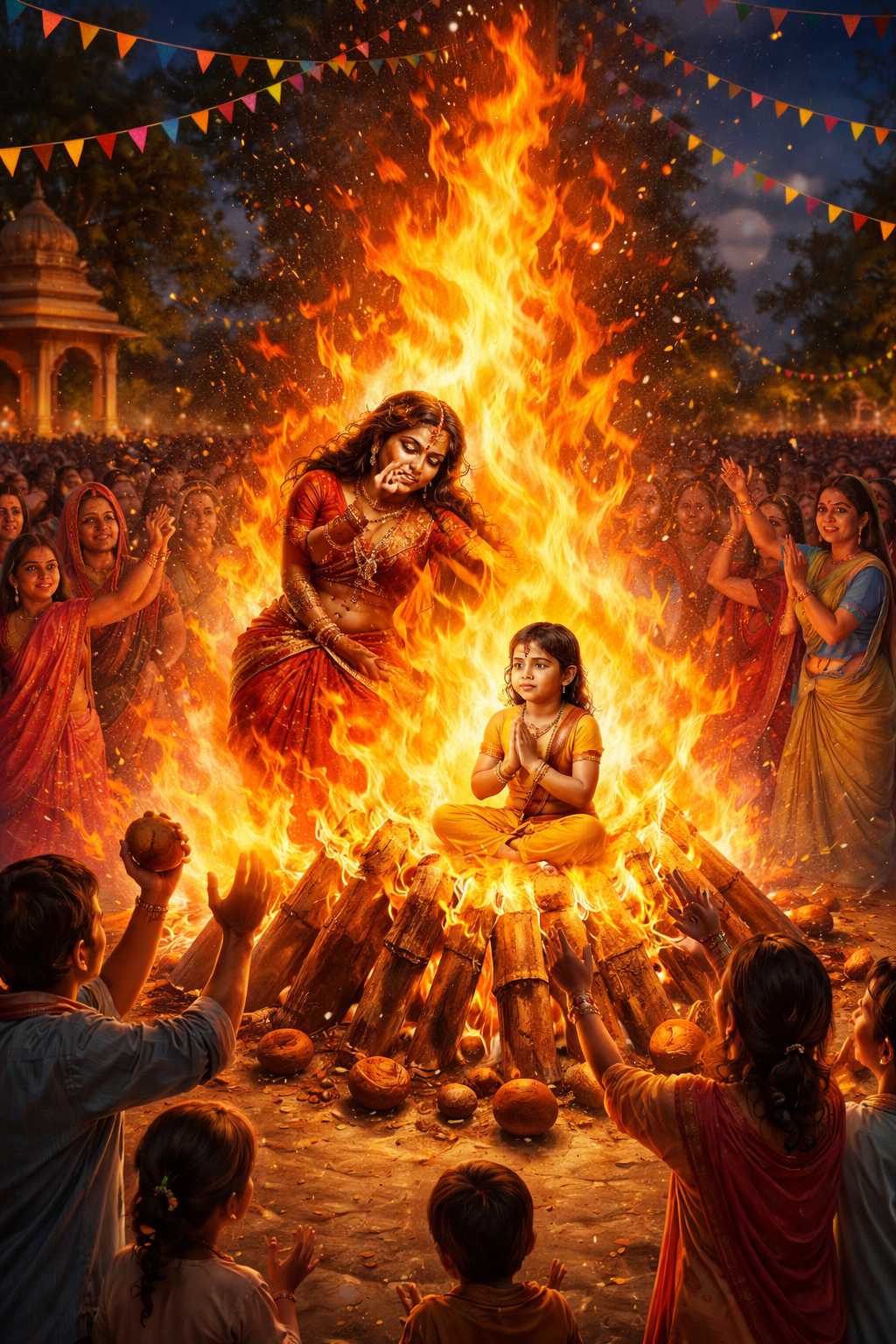
holika dhan

Hiranyakashipu tried many times to kill Prahlada, but each time Prahlada was saved because of his strong faith in Lord Vishnu. Holika, the sister of Hiranyakashipu, had a special blessing that made her immune to fire. The king planned to use her power to kill Prahlada. He ordered Holika to sit in a blazing fire while holding Prahlada in her lap, believing that she would survive and Prahlada would burn to death.

However, things did not go as planned. Because Holika misused her divine blessing for evil purposes, it failed to protect her. Holika was burned to ashes, while Prahlada remained completely safe due to his unwavering devotion.

This event symbolizes the eternal truth that good always triumphs over evil.

Holika Dahan in Himachal Pradesh: Traditions and Cultural Significance

In many villages and towns of Himachal Pradesh, including places like Sujanpur Tira, Palampur, and Kullu etc. people light bonfires on the eve of Holi to celebrate Holika Dahan. Its The start of a new and positive beginning. Families gather around the fire, offer prayers, and celebrate together with traditional music and sweets.

Holi events are organized by local communities throughout Himachal Pradesh, with major Holi melas celebrated in Sujanpur, Mandi, Palampur, and several other towns across the state.

Celebration of Love – Radha & Krishna

Holi is also connected with the playful love story of Radha & Krishna. It is believed that Lord Krishna playfully applied colors on Radha and her friends in Vrindavan.

This tradition became the joyful color-throwing celebration we see today.

Why Did Krishna Play Holi with Colors?

Krishna shared his concern with his mother, Yashoda. She playfully suggested that he could apply color on Radha’s face and make her look like him. Krishna happily followed her advice and applied color on Radha. Radha responded with love and joy. Soon, this playful act turned into a tradition where people throw colors at each other during Holi.  The playful Holi of Radha and Krishna began in Vrindavan and Mathura, where Krishna spent his childhood.
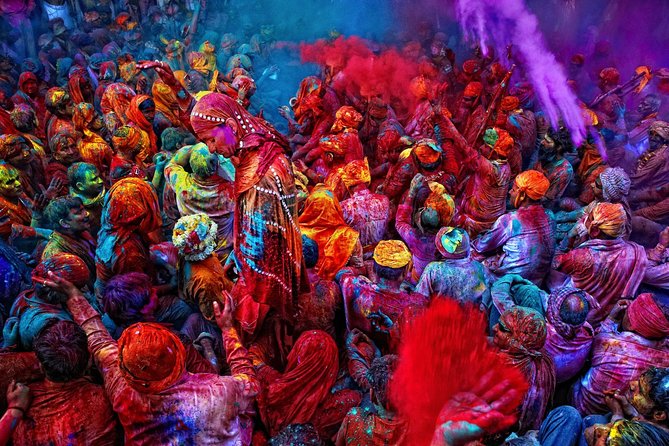
Even today, Holi celebrations in these places are famous for:

  • Lathmar Holi
  • Flower Holi
  • Traditional songs and dances

Holi Festival FAQs (Frequently Asked Questions)

Q. Why do we celebrate Holi?

Ans. Holi is celebrated to mark the victory of Prahlada over Holika, symbolizing the triumph of good over evil. It is also associated with the divine love of Radha and Krishna.

Q. When is Holi celebrated?

Ans. Holi is celebrated in the Hindu month of Phalguna, usually in February or March. It falls on the full moon day (Purnima).

Q. What is Holika Dahan?

Ans. Holika Dahan is the ritual of lighting a bonfire on the night before Holi. It symbolizes the burning of evil and negativity.

Q. What is the story behind Holika Dahan?

According to mythology, Holika tried to burn Prahlada in fire but was burned herself due to misusing her blessing, while Prahlada survived because of his devotion.

Q. How is Holi celebrated in India?

Ans. People celebrate Holi by:

  • Playing with colors
  • Lighting bonfires
  • Singing and dancing
  • Sharing sweets like gujiya
  • Visiting friends and family

Q. Why do people throw colors on Holi?

Ans. The tradition comes from Lord Krishna playfully applying colors to Radha in Vrindavan and Mathura.

Q. How can we celebrate Holi safely?

Ans: We can play with following safety

  • Use herbal colors
  • Avoid water wastage
  • Respect consent
  • Protect eyes and skin
  • Avoid plastic balloons

Where is Holi celebrated?

Holi is one of the major festivals of Hindus, and it is celebrated in different ways across India with great enthusiasm and joy.

  • Uttar Pradesh, especially in Mathura and Vrindavan, Holi is very famous and celebrated grandly.
  • Rajasthan, it is celebrated in a royal and traditional style.
  • Bihar, people celebrate with folk songs and vibrant colors.
  • Madhya Pradesh, especially in the Malwa region, Rangpanchami is very popular.
  • Punjab, Hola Mohalla is celebrated in Anandpur Sahib.

Holi is also celebrated outside India in many other countries with great excitement and celebration

  • Nepal
  • Mauritius
  • Fiji
  • United States
  • United Kingdom

Wherever Indian communities live, Holi is celebrated with happiness, harmony, and great enthusiasm.
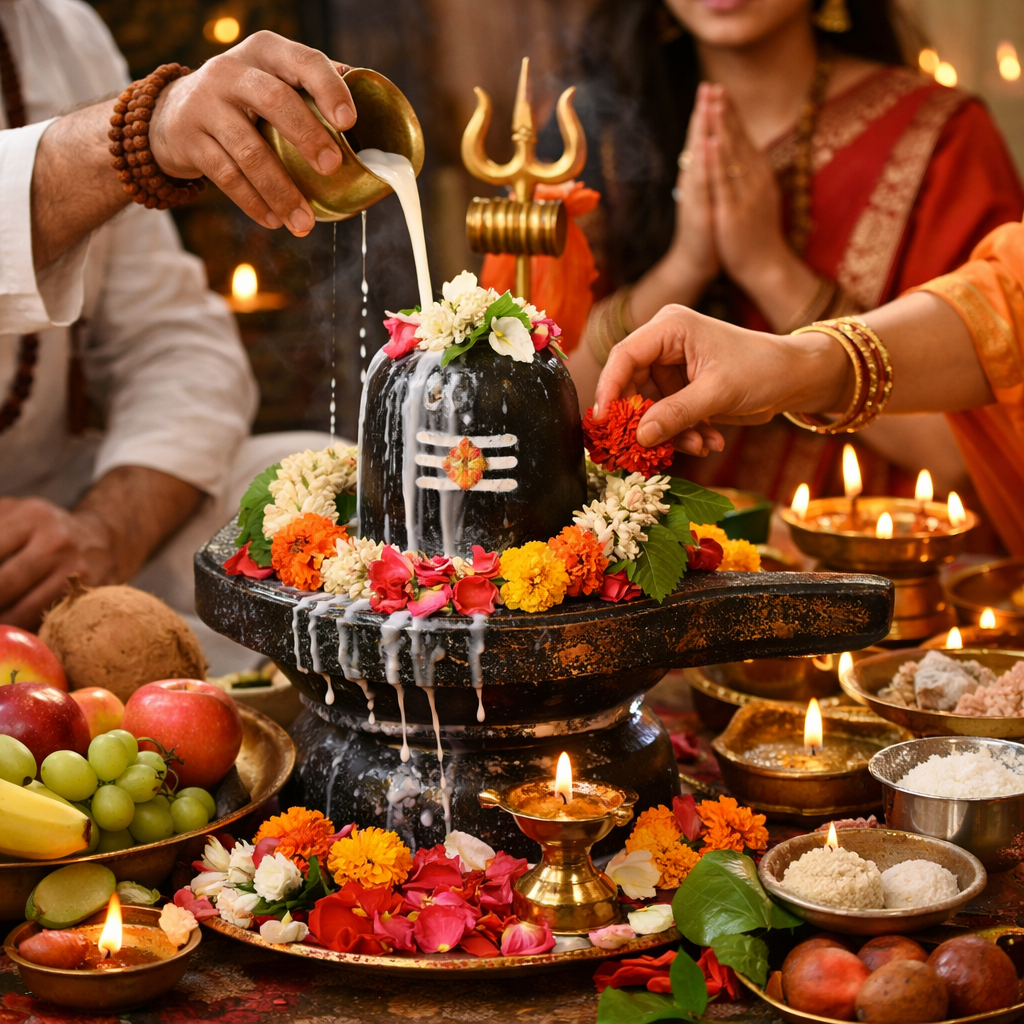
Mahashivratri – Significance, Date, Puja Method & Complete Guide

Mahashivratri is one of the most sacred and spiritually significant festivals in Hinduism. This holy occasion is dedicated to the worship of Lord Shiva and is considered a special day for devotion, meditation, and inner purification.

shivratri

What is Mahashivratri?

The word Mahashivratri means “the Great Night of Lord Shiva.”
On this auspicious day, devotees observe fasting, stay awake throughout the night, and worship the Shiva Lingam with deep faith and devotion. It is believed that worshipping Lord Shiva on this night helps remove sins and leads one toward spiritual liberation.

Why Is Mahashivratri Celebrated?

Mahashivratri is celebrated for several mythological and spiritual reasons:

Marriage of Shiva and Parvati

  • This day marks the divine marriage of Lord Shiva and Goddess Parvati
  • It symbolizes marital harmony, love, and devotion

Samudra Manthan and Neelkanth

  • During the churning of the ocean (Samudra Manthan), deadly poison emerged
  • Lord Shiva consumed the poison to save the universe
  • Because of this, He came to be known as Neelkanth (the blue-throated one)
  • This act represents sacrifice and protection of the world

Emergence of the Shiva Lingam

  • It is believed that the Shiva Lingam first appeared on this day
  • Hence, worship of the Shiva Lingam holds special importance

Night of Spiritual Awakening

  • Mahashivratri is considered the most powerful night for yoga and meditation
  • It opens the path to spiritual growth and liberation (moksha)

When Is Mahashivratri Celebrated?

  • Mahashivratri is observed on the 14th day (Chaturdashi) of the Krishna Paksha in the month of Phalguna
  • It usually falls in February or March
  • The exact date changes every year according to the Hindu lunar calendar

How Is Mahashivratri Celebrated?

  • Special decorations in Shiva temples
  • Observing a day-long fast
  • Performing four Prahar (night-time) puja
  • Chanting mantras, bhajans, and kirtans
  • Reading the Shiva Purana and fasting stories

Mahashivratri Puja Vidhi (Worship Method)

Puja Preparation

  • Take an early morning bath
  • Wear clean clothes
  • Install a Shiva Lingam at home or visit a temple

Items for Shiva Lingam Abhishek

  • Water
  • Milk
  • Curd
  • Ghee
  • Honey
  • Ganga water
  • Bilva leaves, Datura, sacred ash (Bhasma)
  • White flowers

Puja Procedure

  • Chant the mantra “Om Namah Shivaya”
  • Perform abhishek step by step
  • Offer Bilva leaves
  • Light incense and lamps
  • Recite Shiva Chalisa or Shiva Aarti

Importance of Four Prahar Puja

Worshipping Lord Shiva during the four phases of the night is considered highly auspicious:

  • First Prahar – Abhishek with water
  • Second Prahar – Abhishek with milk and curd
  • Third Prahar – Abhishek with ghee and honey
  • Fourth Prahar – Abhishek with Ganga water and fruits

What Should Be Done on Mahashivratri?

  • Observe fasting and self-discipline
  • Follow truth and non-violence
  • Chant Shiva mantras
  • Donate to the needy
  • Stay away from negative thoughts
  • Practice meditation and yoga

What to Eat During Mahashivratri Fast?

  • Fruits
  • Sabudana (sago)
  • Buckwheat flour (Kuttu)
  • Milk and fruit-based meals
  • Water chestnut flour (Singhara)

Spiritual Significance of Mahashivratri

  • Purification of mind, speech, and actions
  • Destruction of negative energies
  • Attainment of inner peace and liberation
  • Balance and stability in life

Mahashivratri – FAQs (Frequently Asked Questions)

Why is Mahashivratri celebrated?

Mahashivratri is celebrated to worship Lord Shiva and for spiritual awakening. It is believed that on this day Lord Shiva married Goddess Parvati and the Shiva Lingam appeared.

When is Mahashivratri observed?

Mahashivratri is celebrated on the Chaturdashi of Krishna Paksha in the month of Phalguna, usually in February or March.

Does Mahashivratri fall on the same date every year?

No, the date changes every year as it is based on the lunar calendar.

What should be offered to the Shiva Lingam?

Water, milk, curd, ghee, honey, Ganga water, Bilva leaves, white flowers, and sacred ash are offered.

Which mantra is most effective on Mahashivratri?

The mantra “Om Namah Shivaya” is considered the most powerful and simple Shiva mantra.

How should a sick person observe the Mahashivratri fast?

A sick person may observe a fruit-based fast or keep a mental fast while praying to Lord Shiva.


Himachal Pradesh Statehood Day

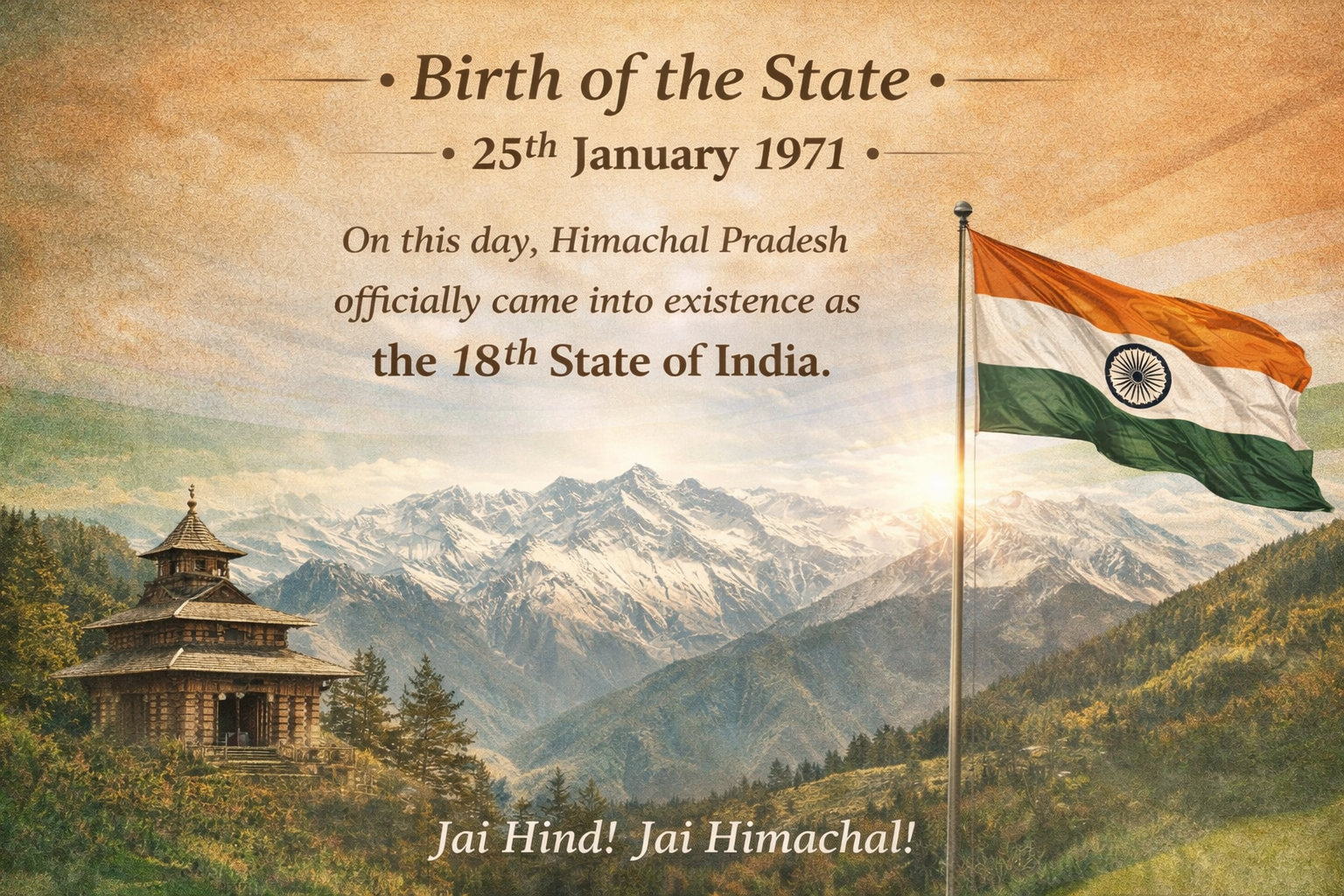
Himachal Pradesh Statehood Day is celebrated every year on 25th January. This day holds an important place in the history of Himachal Pradesh, as it marks the day when the state gained recognition as a full-fledged state of India.

What is Himachal Statehood Day?

Himachal Statehood Day marks the historic day when Himachal Pradesh officially became a full-fledged state of India. This day symbolizes the beginning of the state’s political, social, and cultural development.

Historical Background: Act Passed by Parliament

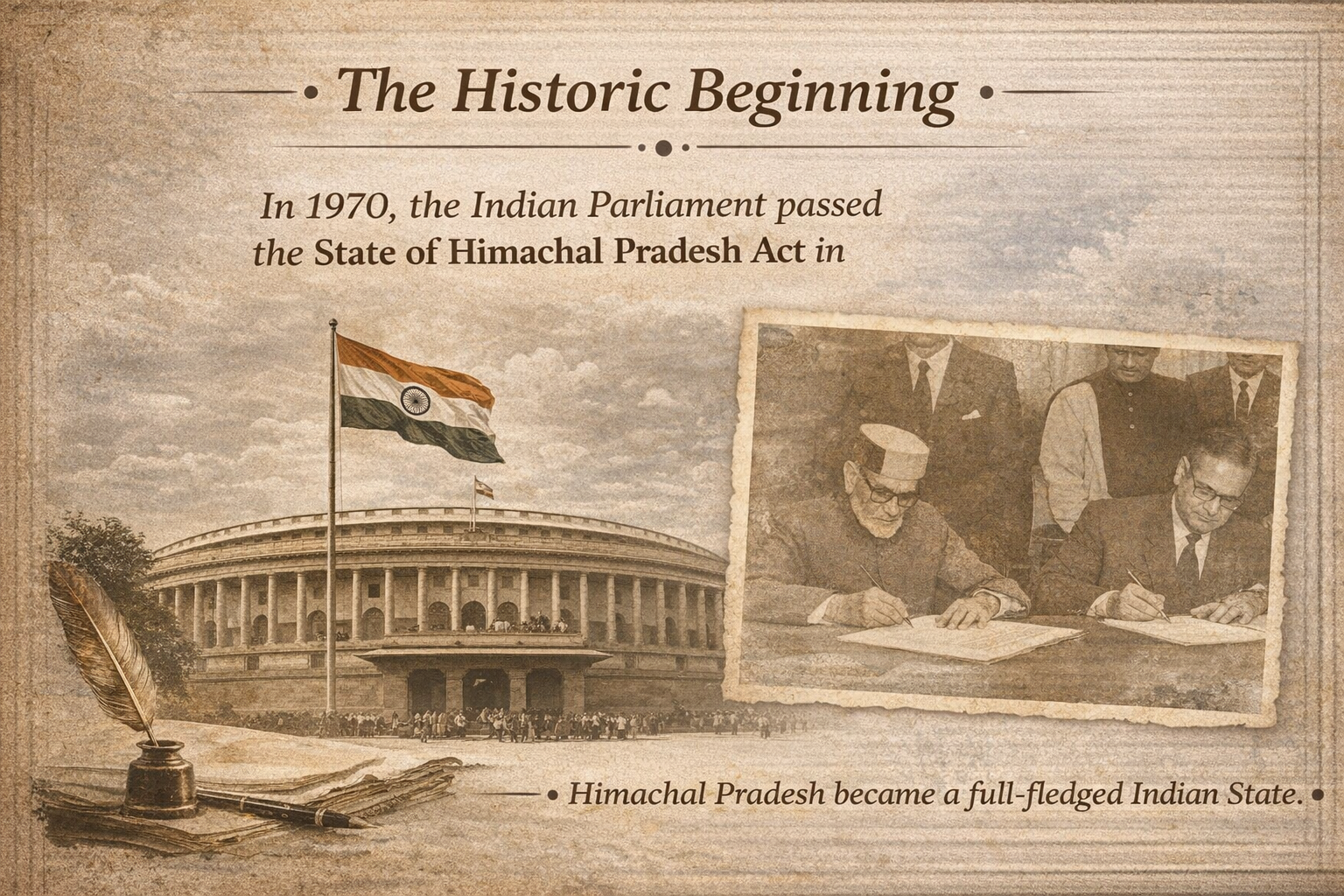
In 1970, the Indian Parliament passed the Himachal Pradesh State Act. This act paved the way for Himachal Pradesh to be granted the status of a full-fledged state.

historyhimachalact

Formation of the State: 25 January 1971

On 25th January 1971, Himachal Pradesh officially became the 18th state of India. This day is a symbol of pride and honor for the people of Himachal.

Importance of 25th January:

25th January is celebrated every year as Himachal Pradesh Statehood Day. On this day, cultural programs, official ceremonies, and various events are held across the state.

Land of Faith and Spirituality:

Himachal Pradesh is known as “Devbhoomi”, meaning the Land of Gods. The state is home to ancient temples, monasteries, and sacred mountains, reflecting its spiritual identity.

Natural Beauty and Culture

Himachal Pradesh is full of natural beauty, with snow-capped mountains, lush green valleys, rivers, and apple orchards. Its folk culture, traditional attire, and customs give the state its unique identity.

Proud to Say – We Are Himachalis:

The true strength of Himachal Pradesh lies in its people, their values, and their unity. Simple lifestyles, hospitality, and a strong sense of community define the state’s identity.

Message to the Youth

It is the responsibility of today’s youth to protect Himachal’s culture, environment, and heritage, so that future generations can also experience this beautiful land.

Happy Himachal Statehood Day

We are proud to be born in this beautiful land.
Jai Himachal! Jai Bharat!

Frequently Asked Questions

What is Himachal Pradesh Statehood Day?

Himachal Pradesh Statehood Day is the day when Himachal Pradesh became a full-fledged state of India. This day is celebrated every year on 25th January.

When did Himachal Pradesh become a state?

Himachal Pradesh officially became the 18th state of India on 25th January 1971.

When was the Himachal Pradesh State Act passed?

The Indian Parliament passed the Himachal Pradesh State Act in 1970, after which the state was officially formed.

What is celebrated in Himachal on 25th January?

On 25th January, Himachal Pradesh Statehood Day is celebrated across the state, with government programs, cultural events, and official ceremonies.

Why is Himachal Pradesh called Devbhoomi?

Himachal Pradesh is called “Devbhoomi” (Abode of Gods) because it is home to numerous ancient temples, monasteries, and sacred mountains, reflecting its spiritual identity.

What is Himachal Pradesh known for?

Himachal Pradesh is known for its:

  • Natural beauty
  • Rich culture
  • Peaceful lifestyle
  • Strong community values

What is the significance of Himachal Statehood Day?

This day is a symbol of Himachal Pradesh’s political development, cultural pride, and the unity of its people.

Message to the Youth

It is the responsibility of today’s youth to preserve Himachal’s culture, environment, and heritage, so that future generations can also honor this Devbhoomi.

Top Things to Do During Snowfall Season in Himachal Pradesh

Himachal Pradesh becomes a winter wonderland during the snowfall season, offering countless activities for travelers and adventure seekers. People who visit Himachal to enjoy snow can experience a variety of snow adventure sports and winter activities, making it one of the best destinations in India for snow tourism.

Best Snow Adventure Destinations in Himachal Pradesh

Himachal Pradesh transforms into a winter adventure paradise during snowfall season. From thrilling snow sports to peaceful white-landscape experiences, these destinations offer the best snow adventures in India.

Skiinginhimachal

Following are the most popular snow adventures activities in Himachal with professional instructors and easy access

  • Skiing
  • Snow Skiing
  • Snowboarding
  • Snow Tubing
  • Sledging
  • Snow Scootering / Snow Biking
  • Snow Trekking
  • Snow camping
  • Ice Skating

    Snow Adventures Destinations in Himachal are:

    • Solang Valley (Near Manali)
    • Manali
    • Kufri (Near Shimla)
    • Narkanda
    • Sethan Valley (Near Manali)
    • Dalhousie – Khajjiar
    • Spiti Valley (Winter Season)
    Snow Trekking in truind, hamtapass

    Most Asked Questions Answered

    Q1. What are the best snow adventure activities in Himachal Pradesh?
    A. Himachal Pradesh offers a wide range of snow adventures including skiing, snowboarding, snow tubing, sledging, snow trekking, snow camping, ice skating, and snow scootering, mainly during the winter season.

    Q2. Which are the best places for snow adventures in Himachal?
    A. The top destinations for snow adventures in Himachal include Solang Valley, Manali, Kufri, Narkanda, Sethan Valley, Dalhousie–Khajjiar, and Spiti Valley.

    Q3. When is the best time to enjoy snow adventures in Himachal?
    A. The best time for snow adventures in Himachal is from December to February, when most regions receive heavy snowfall and snow sports are fully operational.

    Q4. Is snow adventure safe for beginners in Himachal?
    A. Yes, snow adventure activities are safe for beginners when done at certified locations like Solang Valley and Kufri, where trained instructors, safety gear, and guided sessions are available.

    Q5. Which place in Himachal is best for skiing?
    A. Solang Valley, Narkanda, and Kufri are considered the best skiing destinations in Himachal Pradesh, with slopes suitable for both beginners and professionals.

    Q6. Is snowfall guaranteed during winter in Himachal?
    A. Snowfall is common in winter, but it depends on weather conditions. Higher-altitude areas like Solang Valley, Narkanda, and Spiti have better snowfall chances.

    Things to Remember When Going for Snow Adventure Activities in Himachal

    • Wear Proper Winter Clothing – Waterproof jacket and pants, now boots with good grip, Woolen socks, gloves & cap etc.
    • Always Use Safety Gear – Helmet for skiing & snow biking, Knee and elbow guards
    • Choose Authorized Adventure Operators – Book activities only with registered local operators, Check instructor experience
    • Check Weather & Snow Conditions – Avoid activities during heavy snowfall or storms, Confirm road conditions before traveling
    • Choose the Right Place for Your Skill Level : Beginners: Kufri, Solang Valley , intermediate: Manali, Sethan Valley and Experts: Narkanda, Spiti Valley
    • Camera protection
    • Safety gear
    • Water & snacks
    • Carry Essential Documents & Cash – Government ID, Hotel booking details, Some cash (network issues in snow areas)

    Best Time : Dec – Feb

      Himachali Lagan Mundup (Ved): The Sacred Wooden Ritual of Seven Pheras in a Girl’s Marriage

      Himachal Pradesh is known for its rich cultural heritage, deeply rooted traditions, and unique marriage rituals, which are quite different from those in the plains of India. Each region of Himachal has customs that are closely connected to nature, ancestors, and community values. Among these sacred traditions, the Himachali Mundup, also known in many areas as Ved, holds a special and significant place in a girl’s marriage ceremonies.

      Lagan Mundup, or Ved is not just a ritual object; it is a symbol of tradition, purity, responsibility, and the blessings passed down from generation to generation. Traditionally, it is prepared in a simple wooden form, which enhances its natural and sacred appearance, reflecting Himachali rural life. Even today, in many rural areas of Himachal Pradesh, Mundup is carefully preserved and respectfully used during weddings, especially at the time of the seven pheras.

      Question 1: What is Himachali Lagan Mundup or Ved?

      Answer: Lagan Mundup (or Ved) is a traditional ritual object used in Himachali Hindu marriage customs, primarily associated with the bride’s side. It is used during important marriage ceremonies, especially while performing the seven pheras around the sacred fire.

      In traditional Himachali weddings, Lagan Mundup is usually:

      • Made of wooden structure
      • Simple in design
      • Free from heavy decoration
      • Crafted using locally available wood

      Traditional Wooden Structure of Lagan Mundup

      One of the most beautiful and distinctive features of Himachali lagan Mundup is its traditional wooden form.

      Materials Used

      • Locally sourced wood (often deodar or other sacred wood)
      • Smoothened but not overly polished surface
      • No use of artificial colors or modern materials
      • Natural wooden color
      • Simple, strong, and stable structure
      • Designed to last for decades

      A wooden Lagan Mundup symbolizes:

      • The strength of marriage
      • The stability of family life
      • The spiritual connection with the earth and ancestors

      In Himachali culture, wood is considered pure and auspicious because it comes directly from nature. For this reason, a Mundup made of wood is considered more sacred and appropriate than one made of metal or modern decorative materials.

      How is Lagan Mundup used during the seven pheras?
      The seven pheras are considered the most sacred and important part of a Hindu marriage. In Himachali wedding traditions, Mundup holds a special presence during these pheras.

      Role of Mundup During the Pheras

      • According to regional customs, the Mundup is placed or held during the ceremony.
      • Elder women and senior family members guide the bride on the proper respect and procedure of the ritual.
      • The wooden Mundup is kept near the sacred fire.

      What is the meaning of each phera in Himachali tradition?
      In Himachali tradition, each phera symbolizes a different value and vow, such as duty, trust, prosperity, respect, health, harmony, and lifelong bond.

      • First Phera – Duty: A vow to support each other and share responsibilities in daily life.
      • Second Phera – Trust: A pledge to maintain mutual trust, honesty, and fidelity in marriage.
      • Third Phera – Prosperity: A resolution to work together for the family’s growth and well-being.
      • Fourth Phera – Respect: A vow to uphold mutual respect between husband, wife, and both families.
      • Fifth Phera – Health: A promise for each other’s physical and mental well-being and care.
      • Sixth Phera – Harmony: A pledge to lead a peaceful, understanding, and loving married life.
      • Seventh Phera – Lifelong Bond: A vow to stay together and support each other through all challenges throughout life.

      The Mundup is considered a symbol of the responsibility and sacredness of all these vows.

      Question 1: What is the cultural significance of Mundup in Himachal Pradesh?

      Answer: Mundup is considered a symbol of purity and simplicity in Himachali culture. It serves as a medium to preserve traditions and rituals during marriage ceremonies.

      Question 2: Why is Mundup considered a symbol of ancestral blessings?

      Answer: Mundup is preserved and used generation after generation, representing the grace and blessings of ancestors.

      Question 3: How does Mundup remind people of traditional values?

      Answer: Its simple design and traditional use remind participants of values such as restraint, respect, and responsibility in marriage.

      Question 4: Does Mundup protect against the evil eye?

      Answer: According to Himachali beliefs, Mundup symbolizes protection for the bride from negative energy and the evil eye during the marriage ceremony.

      Question 5: What does the wooden form of Mundup signify?

      Answer: A wooden Mundup indicates that a marriage should be natural, strong, and long-lasting.

      Question 6: What values does Mundup associate with marriage?

      Answer: Mundup teaches that marriage should be based not on show or luxury but on tradition, love, and family values.

      Question 7: What is the difference between Lagan Mundup and Ved?

      Answer: In reality, lagan Mundup and Ved are not two separate items; they refer to the same traditional marriage ritual, known by different names in various regions. Some regional differences exist:

      • Mundup: Commonly used in Upper Himachal, Shimla region, and some central Himachali areas.
      • Ved: Used in Kangra, Hamirpur, Bilaspur, Mandi, Kullu, and surrounding areas.

      Question 8: What is the significance of modern technology and electric/digital integration in Himachali Ved?

      Answer: Nowadays, traditional Himachali Ved is being enhanced with modern technology and electric/digital mediums. This makes marriage ceremonies more attractive, convenient, and social-media-friendly while maintaining the traditional sanctity.

      Ashok Dard: Weaving the Beauty of the Himalayas into Hindi Poetry

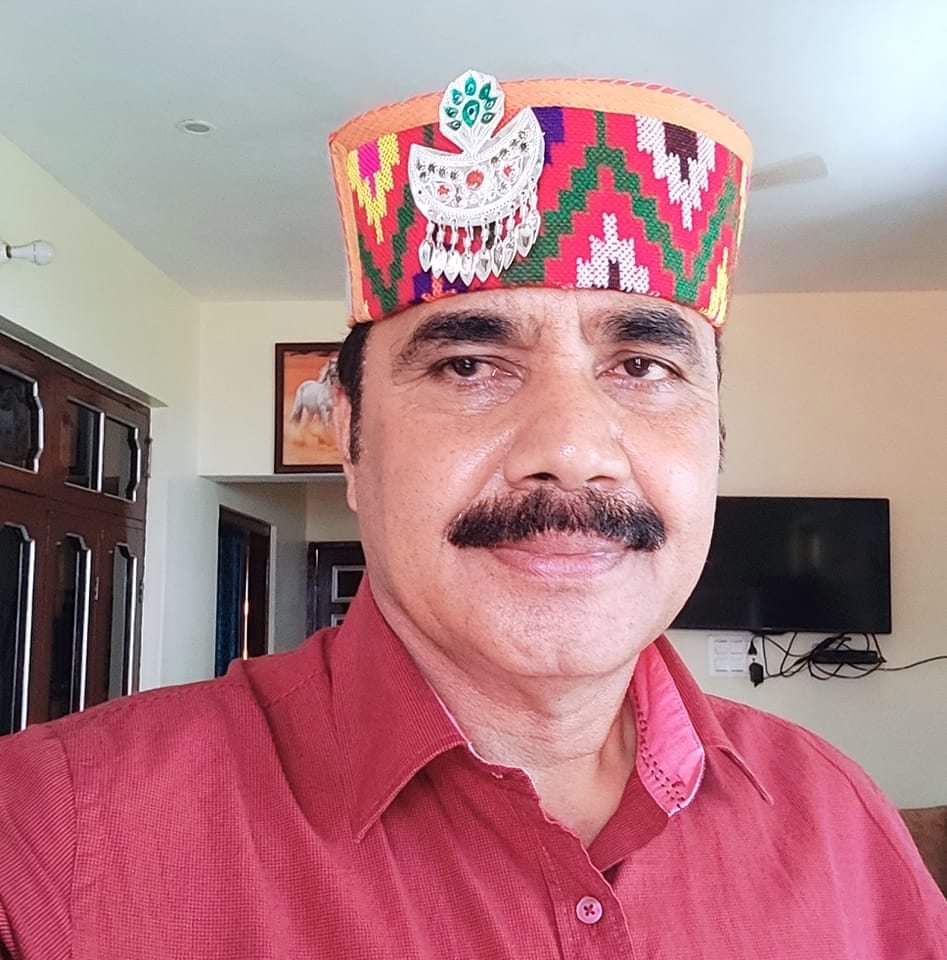
      Meet Ashok Dard, a renowned Himachali poet from Dalhousie, Chamba, Himachal Pradesh. His work has earned him recognition not only in Himachal Pradesh but across various states in India. He has also received numerous awards for his contributions to literature.

      Education : Shastri, Prabhakar, J.B.T, M.A. (Hindi), B.Ed.

      Language knowledge : Hindi, English, Sanskrit, Himachali Pahari

      JOB: Government Senior Secondary School Hindi Teacher

      Writing Styles : Poems, stories, short stories, children’s poems, Himachal folk tales and cultural writings

      Writing Description:

      For the last thirty years, he has been continuously writing and publishing in various genres of Hindi and Pahari in dozens of renowned newspapers and magazines of the country, writing many Himachali songs and bhajans.

      National AnthologyCompositions {poetry} compiled in about twenty-five anthologies. Short stories are compiled in some national short story collections and stories and folktales are compiled in story collections.

      Broadcast:

      Composition reading , broadcasting from Doordarshan Shimla , Akashvani Shimla and Dharamshala and participation in many regional and national poetry conferences, short story conferences, poetry reading in the International Literature Festival 2022 organized in Shimla.

      Poetry Collection:

      Khyalan di khushbu, Himachali Kavita Sangrah, Anjuri Bhar Shabd, Mere Pahad Mein, Mehkate Pahad, Savendna’s phool, Dhoop Chhaon, Mutthi Bhar Sapne etc.

      Story Collection:

      Sindoori Dhoop – Miss Call, Pehla Pyar, Sapne Sach He To, Dard Ke Chhinte, Mother , Legal Varis, Siskati Sandhya, Sindoori Dhoop, Dehleej Ke Paar, Ghar Vapsi, Chamtkaar, Phadinya etc.

      Recognition/ Award/ Honor:

      Awarded First Place in the All India Poetry Competition organized by the Himachal Pradesh State Journalist Federation. Acharya Vishisht Award 2014 for folk literature by the Himachal Pradesh Simour Kala Sangam. Second Prize for the short story “Deshbhakti” in the short story competition organized by Social Aakrosh.

      In addition to these, honored by numerous literary institutions, including:

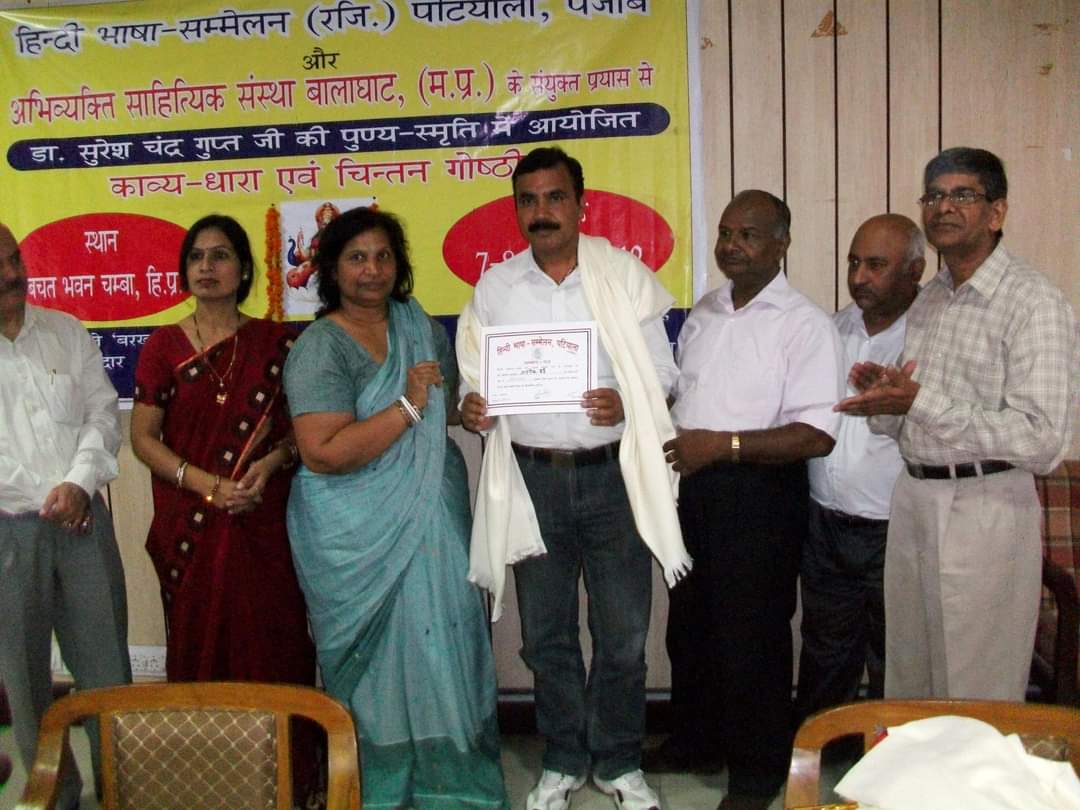
      • Saraswat Award by the Hindi Language Conference, Patiala
      • Chamba Crafts Council (Registered)
      • Nikhil Shikhar Samman 2013 by Prerna Multidimensional Organization, Chhattisgarh
      • Poetry Siromani Tulsidas Samman by Prakashan, Jalandhar
      • Sahitiyaan Sahityakar Sammelan 2017 honored by Him Sahityakar Sabha Bilaspur
      • Pradwara Divya Tulika Sahitiyayan honored in Gwalior
      • Gyanodaya Sahitya Bhushan 2014 Award by Gyanodaya Sahitya Sanstha Karnataka
      • Neela Aasman Literary Award by Himkhand Patrika Mandi Himachal Pradesh
      • Saraswat Samman by Triveni Sahitya Academy Jalandhar
      • Sahitya Bhushan 2018 by Kayakalp Sahitya Kala Foundation Noida


      Apart from these, honored by many other literary institutions.

      Other:
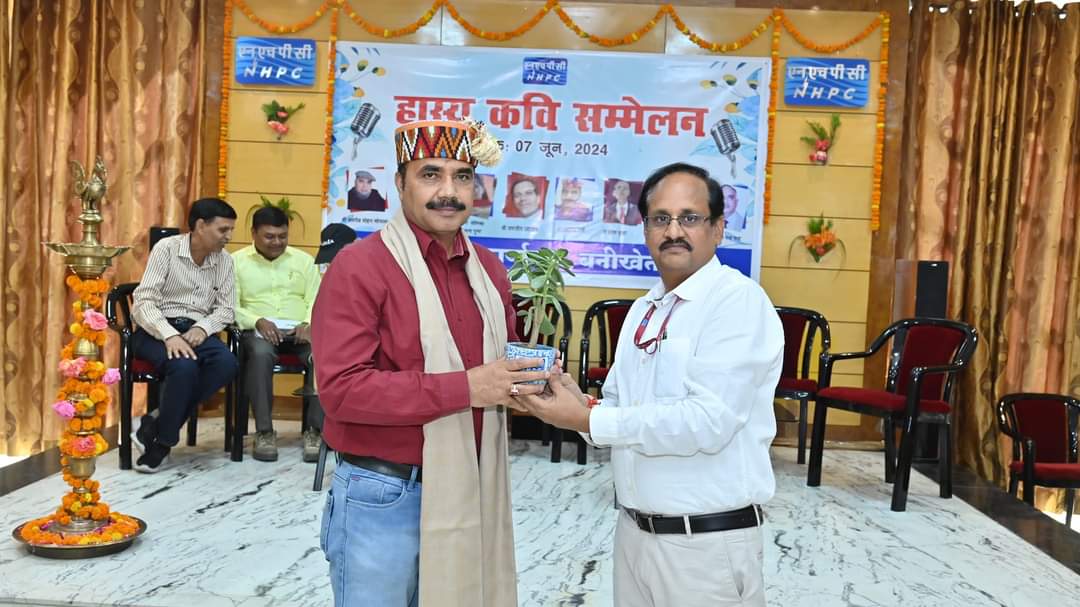
      President of Irawati Literature and Art Forum Banikhet
      Many international conferences organized.
      Himachal Pradesh Language and Culture Academy Shimla Presently Member


      More information : Ashok Dard
      Village Ghatta, Post Office Banikhet, District Chamba, Himachal Pradesh
      Mobile: 09418248262

      Richa Sharma Launched Pahadi Lohri Lokgeet

      Everyone is familiar with our Celebrity Himachali pahadi the Delhi-based star, Richa Sharma. She has recently launched her Pahadi lohri lokgeet, showcasing her beautiful voice. During the lohri festival week, numerous memes were created by Himachali individuals on instagram. This lohri song evokes the beauty of traditional festival and its associated emotions. Please enjoy her famous song and follow and subscribe her channel.

      Himachal Samaj Delhi Pradesh Celebrated 22nd Annual Lohri Festival January 2024

      himachal samaj delhi pradesh annual 22nd program delhi

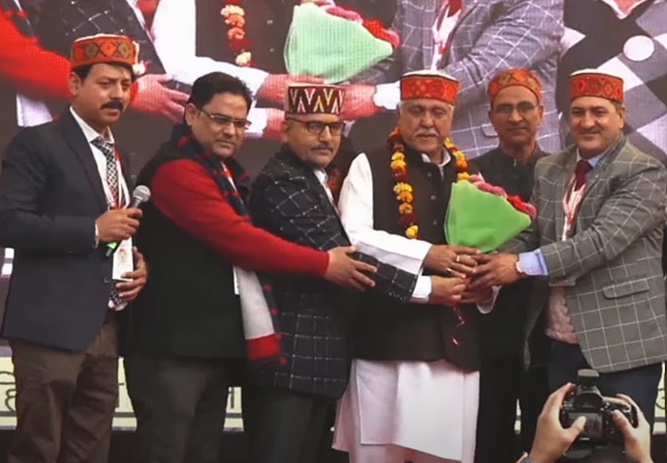
      Manoj Dogra : Himachal Samaj, Delhi Pradesh, a social organization of Himachalis living in Delhi, celebrated its 22nd Lohri and New Year annual festival on Sunday 7th January with great joy and enthusiasm at Vindal Vatika Sant Nagar Burari Nathu Pura Delhi.

      Mr. Manejer Singh Leader of Himachal Samaj Delhi Pradesh said that like every year, this year also various types of cultural programs based on the art and culture of Himachal presented by Himachali folk artists and singers.

      Mohit Garg, a very famous singer from Himachal, made people dance to his songs.

      Team Sunny from Himachali Sanskrit Kala Manch Delhi Pradesh presented Himachali songs and folk dances. Children also danced a lot on Himachali songs.

      There are many Himachali singers living in Delhi also gave their performance like Vinod Dogra, Deeksha Thakur,  Baldev Sankhyan, Sunita Rana. Kulbir Rana and Vikas Rana also forced people to dance.

      Special guests dignitaries of Himachal society and representatives of social service organizations who came to the function were specially honoured. Specially in the function, the President of Temple Cell BJP Delhi State Karnal Singh said from the stage towards Ghosna that a special train and arrangements for accommodation, food and darshan will be made for the Himachalis living in Delhi to go to Ram Temple Ayodhya in his cell. It will be free of cost from Shri Baba Balak Nath Ji, the family deity of Himachals.

      On behalf of Himachal Samaj Delhi Pradesh, Ranjit Singh Rana honored him by wearing a memento and a Himachali cap, the pride of Himachal. General Secretary Kulbir Rana said that all the guests who came to the Himachali function enjoyed the delicious and delicious traditional Himachali Dham prepared by the cooks specially brought from Himachal.

      Special guests at the function included K K Saklani, Prakash Sharma, S N Sharma, Kulbhushan Pradhan, Vijay Dogra, Manohar Lal Thakur, Yasodha ji, Pradeep thakur, Rakesh Chandra, Gandhi ji, Rajendra Thakur, Kishori lal Sharma, Manoj Dogra, Valdev Sakhyan, Subhash Thakur, Puneet Sharma, Pawan Vasudev, Pawan Sharma, Lalit Dogra, Rakesh Thakur, Satish Bedi, Ajit Chauhan, Naresh Thakur, Rajendra Sharma, Rajneesh Katoch, Rahul, Anirudh Sharma and many other famous personalities were presented in the program.

      Source: Manoj Dogra


      Himachal Pradesh Cricket Squad (Team) 2024

      Himachal Pradesh Cricket Ranji Trophy Squad 2024

      Himachal Cricket Squad For Ranji Trophy 2024

      Following are Himachali Ranji Trophy Squad for 2024

      • Akunsh Bains : Wicketkeeper Batsman
      • Prashant Chopra : Opening Batsman
      • Ekant Sen : Batsman
      • Rishi Dhawan : Allrounder
      • Sumeet Verma : Allrounder
      • Nikhil Gangta : Allrounder
      • Akash Vasisht : Allrounder
      • Vaibhav Arora : Bowler
      • Mayank Dagar : Bowler
      • Arpit Guleria : Bowler
      • Avikash : Batting / Bowling
      • Amit Kumar : Batting / Bowling
      • Vinay Galetiya : Batting / Bowling
      • Gurvinder Singh : Batting / Bowling
      • Ankit Kalsi : Batting / Bowling
      • Naveen Kanwar : Batting / Bowling
      • Shubham Arora : Batting

      Divya Rana Represented Himachal in Khelo India

      Won gold in wushu 2023 khelo india
      दिव्या राणा ने खेलो इंडिया 2023 में हिमाचल प्रदेश के लिए स्वर्ण पदक जीता
      गोल्डन गर्ल दिव्या राणा का परिचय, जो हिमाचल में युवा लड़कियों के लिए प्रेरणा की अगली किरण बनने के लिए तैयार है। उनकी आश्चर्यजनक उपलब्धियाँ न केवल उनकी अविश्वसनीय प्रतिभा का प्रमाण हैं बल्कि उनके राज्य के लिए गर्व का स्रोत भी हैं। कई पदक हासिल करने के बाद, उन्होंने हाल ही में नॉर्थ जोनल स्पोर्ट्स इवेंट में हिमाचल का प्रतिनिधित्व करके अपनी कौशल का प्रदर्शन किया, और अपनी यात्रा में एक और शानदार अध्याय जोड़ा।
      
      वह एक जबरदस्त मार्शल आर्टिस्ट है, जो कई आयोजनों में सक्रिय रूप से भाग लेती हैं और कई योग्य पदक हासिल कर चुकी हैं ।
      
      दिव्या राणा युवा लड़की ने नॉर्थ जोनल खेलो इंडिया वुशु महिला लीग दिसंबर 2023 में हिमाचल प्रदेश का प्रतिनिधित्व किया और स्वर्ण पदक जीता।
      
      दिव्या राणा ने यहां यह भी उल्लेख किया कि खेलो इंडिया उत्तर क्षेत्रीय महिला लीग में 42 लड़कियों ने भाग लिया था और उन्होंने इस आयोजन में जूनियर और सीनियर स्तर पर प्रदर्शन करने वाली सभी लड़कियों की सराहना की और निम्नलिखित हिमाचल प्रदेश से हैं  1) पूनम सांडा खिलाड़ी - कांस्य 2) कशिश ताइज़िशन इवेंट प्लेयर - गोल्ड। 3) आर्य इवेंट - ताईजीशान - सिल्वर 4) मनोरमा इवेंट - चांगक्वान - सिल्वर 5) ज्योति सांडा प्लेयर - ब्रॉन्ज 6) दया देवी इवेंट - जियानशु - सिल्वर 7) रिया - नानक्वान - सिल्वर 8) ज्योति - नंदाओ - गोल्ड 9) रजनी ताइची - कांस्य 10) अनीता सांडा खिलाड़ी - कांस्य 11) एंजल ताईजिशान रजत 12) अंशिका - नानक्वान - कांस्य 13) अवनी कपूर -चानक्वान सी - कांस्य 14) काजल बगुझांग इवेंट - कांस्य 15) पायल - जियानशु - कांस्य। हमें वास्तव में इन लड़कियों पर गर्व है जिन्होंने अच्छा प्रदर्शन किया और सम्मान श्रेणी में पदक जीते।
      
      दिव्या राणा ने प्रमुख आयोजनों में भाग लिया और पदक जीते:
      
      सीनियर नेशनल वुशु चैंपियनशिप में कांस्य पदक जीता: खेलो इंडिया के 2022-23 संस्करण में चंडीगढ़ विश्वविद्यालय में दिल्ली का प्रतिनिधित्व किया।
      
      कांस्य पदक जीता - पुणे, महाराष्ट्र में 32वीं सीनियर राष्ट्रीय वुशु चैंपियनशिप में शानदार प्रदर्शन। जून 2023 - 2 जुलाई 2023
      
      स्वर्ण पदक जीता - (जियांशू श्रेणी) छठी फेडरेशन कप वुशु चैंपियनशिप 20 से 24 मार्च 2023 (लवली प्रोफेशनल यूनिवर्सिटी जालंधर (पंजाब)
      
      स्वर्ण पदक जीता - (क्यू इयान जी शू श्रेणी) छठी फेडरेशन कप वुशु चैंपियनशिप 20 से 24 मार्च 2023 (लवली प्रोफेशनल यूनिवर्सिटी जालंधर (पंजाब)
      
      रजत पदक जीता - (चांगक्वान श्रेणी) छठी फेडरेशन कप वुशु चैंपियनशिप 20 से 24 मार्च 2023 (लवली प्रोफेशनल यूनिवर्सिटी जालंधर (पंजाब)
      
      चौथा स्थान - 36वाँ राष्ट्रीय खेल: गुजरात 2022
      
      दिल्ली के लिए कांस्य पदक (जियांशू श्रेणी) - श्रीनगर में 31वीं सीनियर राष्ट्रीय वुशु चैंपियनशिप 2022
      
      2019 में ऑल इंडिया यूनिवर्सिटी में 4 गोल्ड
      
      जूनियर नेशनल 2018 में 3 गोल्ड
      
      दिव्या राणा ने 2016 में अपनी खेल यात्रा शुरू की और अपने खेल में कई पदक जीते।
      
      दिव्या राणा ने अपने अगले प्रमुख लक्ष्य के रूप में उत्तराखंड में 2024 में होने वाले राष्ट्रीय खेलों पर नजर रखी है।
      
      वह खेलों में भाग लेने की प्रेरणा का श्रेय अपने माता-पिता और रिश्तेदारों के अटूट समर्थन और प्रोत्साहन को देती हैं।
      
      दिव्या राणा विशेष रूप से मोनी लामा को धन्यवाद देती हैं जो वुशु सिखाते हैं और हिमाचल प्रदेश के महासचिव श्री परमा नन्द आज़ाद सर को भी धन्यवाद देते हैं जिन्होंने मुझे इस आगामी अवसरों में मेरा प्रतिनिधित्व करने का मौका दिया।
      
      जैसा कि हम खेल में उनकी उल्लेखनीय उपलब्धियों को देखते हैं, यह स्पष्ट हो जाता है कि उनकी सफलता व्यक्तिगत करियर के विकास से कहीं आगे तक फैली हुई है। यह उनके परिवार के लिए गर्व का स्रोत है और अनगिनत लड़कियों के लिए प्रेरणा का प्रतीक है। हम उनके भविष्य के प्रयासों में निरंतर सफलता और समृद्धि के लिए हार्दिक शुभकामनाएं देते हैं।